

In February, I stood outside the Allianz Arena after Celtic’s late defeat to Bayern Munich, full of pride in a performance that restored real credibility to Celtic’s image on Europe’s premier stage. Alphonso Davies’ last-minute equaliser denied us the chance to take the German giants to extra-time, but despite the bitter defeat, I left Munich with genuine optimism that the club was on the right track.
Fast forward six months, and that pride and optimism has been replaced by the all-too-familiar feelings of despair and pessimism. Celtic’s penalty shootout defeat to Kairat Almaty of Kazakhstan ranks among the most embarrassing results in the club’s European history. The Kazakh champions sit 315th in UEFA’s Club Coefficient ranking — some way below Aberdeen, Dundee United, and St Johnstone.
The backlash from a result like this spares no one, and comparing the resources of both clubs makes it easy to conclude that the manager and players should have had enough to navigate the tie. Of course, Celtic’s lack of tempo and creativity over 210 minutes of football is the responsibility of the football staff.
But you only have to study Celtic’s recent history in Champions League qualifiers to see the common, fundamental flaw in the club’s strategy. Celtic have now failed to navigate Champions League qualifiers seven times in 12 seasons. The list of clubs that have prevailed is damning: Maribor, Malmö, AEK Athens, CFR Cluj, Ferencváros, FC Midtjylland, and Kairat Almaty.
The common thread is a lack of preparation — a sort of self-inflicted, self-prescribed limitation put in place by the people who run the club. Go back to 2015, and the narrative was that we had to wait to secure qualification before bringing in adequate quality players. In 2025, with the guts of £100m in the bank, that excuse can no longer wash. Now we are asked to believe that bringing in players before the final days of a transfer window is some sort of mere impossibility.
Last season’s acquisitions of Adam Idah, Auston Trusty, and Arne Engels for a combined £26m are paraded as an excuse for this summer’s inertia, rather than as evidence of a failed recruitment operation that flounders in the final throes of each transfer window to save face.
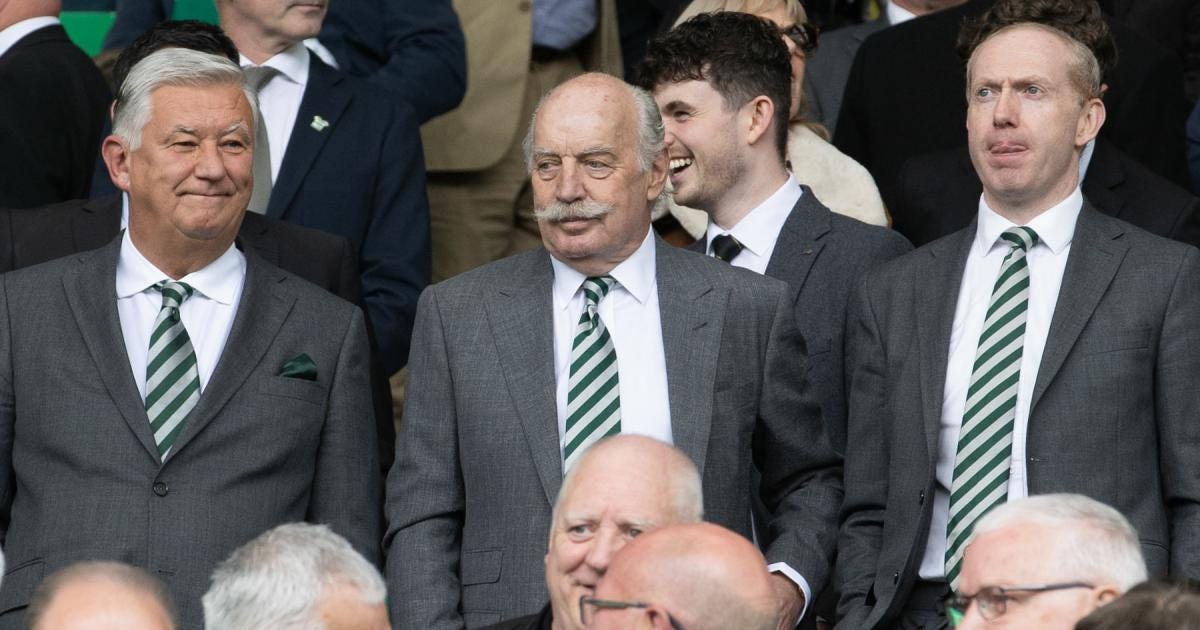
Celtic, under Dermot Desmond’s majority ownership and the Lawwell-lite leadership of Michael Nicholson, has a ceiling. The cycle that led us to the Kairat catastrophe will continue to repeat. There is no plan for how to deploy the fortunes built up on the back of three successive Champions League campaigns and huge profits in player sales.
Last night’s defeat is ground zero in the Celtic board’s self-fulfilling prophecy: money must be saved in case we don’t make the Champions League. Lo and behold, that feeble, risk-averse mindset has cost the club hundreds of millions of pounds in avoidable Champions League exits. Strap yourselves in for years of exile from Europe’s top competition, and the long journey of diminishing returns back to 2015.
When they don’t have the money, they tell you they can’t invest before we make the Champions League. When they do have the money, they tell you it must be saved in case we don’t make the Champions League. And so we stumble from embarrassing European failure to embarrassing European failure, patting ourselves on the back for overcoming the disjointed mess that is Rangers.
The next time Celtic are eliminated by some nondescript minnows in Champions League qualifying — and don’t worry, you won’t have long to wait — remember this during the fallout: the manager will be different, the players will be different, but the Celtic board will be the same.